Suna Besha: Puri’s Grand Golden Celebration of Lord Jagannath’s Divine Majesty
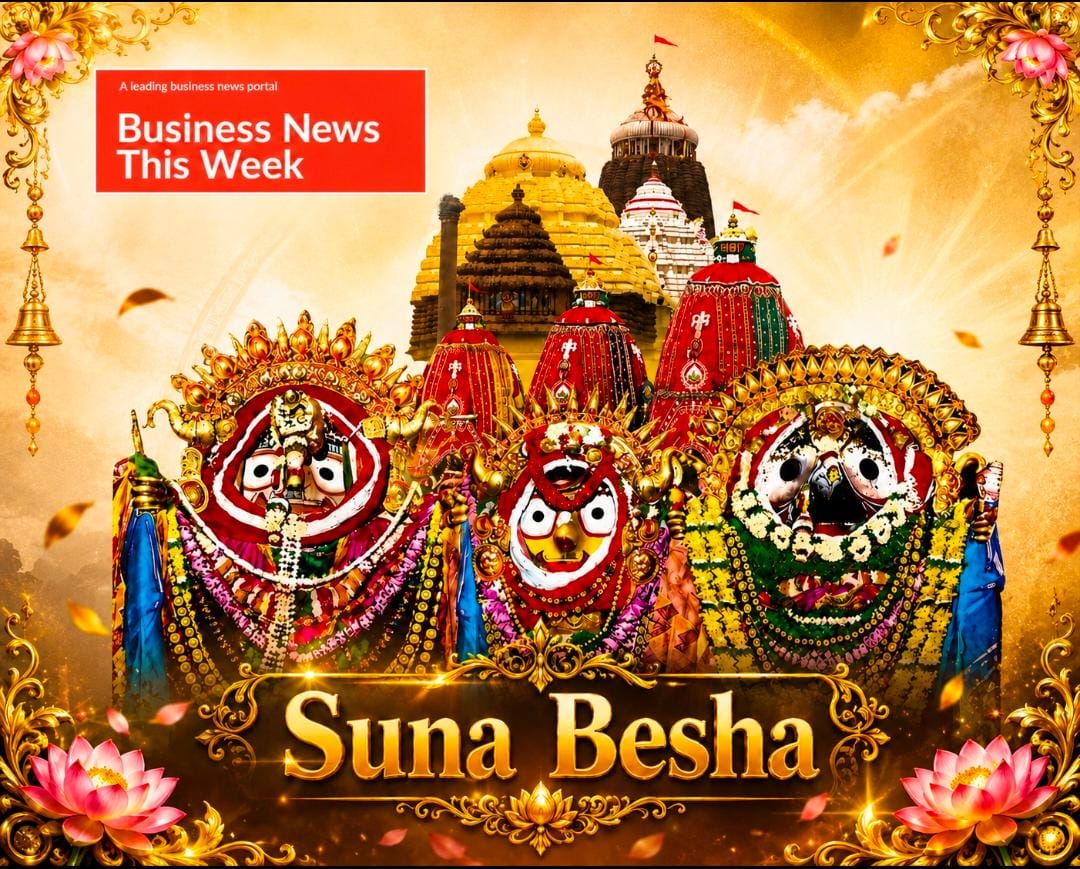
The holy city of Puri is preparing to witness one of the most awe-inspiring and spiritually significant moments of the annual Rath Yatra — the Suna Besha, a centuries-old tradition where Lord Jagannath, Lord Balabhadra and Devi Subhadra are adorned in magnificent gold ornaments on their chariots.
Also known as Raja Besha or Rajarajeshwara Besha, the grand ritual is observed on Bahuda Ekadashi, the 11th day of the bright fortnight of Ashadha, following the return of the deities from the Gundicha Temple. On this sacred occasion, the three deities appear in a resplendent golden attire, creating a divine spectacle that attracts devotees from across the country and beyond.
The sight of the deities shining in gold, seated on their majestic chariots near the Lion’s Gate (Singhadwara) of the Jagannath Temple, is considered one of the most memorable experiences of the Rath Yatra festival.
A Tradition Rooted in History
The origin of Suna Besha dates back to the 15th century during the reign of Odisha’s King Kapilendra Deva in 1460 AD. According to tradition, after returning victorious from military campaigns in southern India, the king offered a vast treasure of gold and precious gems to Lord Jagannath as a mark of devotion.
The donated wealth was used to create elaborate ornaments for the deities, and the practice of adorning Lord Jagannath, Lord Balabhadra and Devi Subhadra with these golden decorations during Rath Yatra became an enduring tradition.
Over the centuries, Suna Besha has remained a symbol of Odisha’s rich spiritual heritage, devotion and artistic excellence.
A Divine Display of Gold Craftsmanship
The golden ornaments used during Suna Besha are preserved in the temple treasury, known as the Bhitara Bhandara. With elaborate security arrangements, the ornaments are brought out and handed over to temple servitors, who carefully decorate the deities on their respective chariots.
Lord Jagannath is adorned with a golden Chakra (wheel), along with a silver Sankha (conch), while Lord Balabhadra is decorated with a golden plough and mace, representing their divine attributes.
The magnificent ornaments include:
- Suna Mukuta – Golden crown
- Suna Hasta – Golden hands
- Suna Payar – Golden feet
- Suna Chakra – Golden wheel
- Suna Gada – Golden mace
- Suna Padma – Golden lotus
- Suna Kundal – Golden earrings
- Mayur Chandrika – Golden peacock feather ornament
- Suna Mala – Intricately designed gold necklaces
Each ornament carries deep religious meaning and reflects the exceptional craftsmanship passed down through generations.
One of the Most Revered Forms of the Deities
Among the 32 traditional forms or Beshas of Lord Jagannath, Lord Balabhadra and Devi Subhadra, Suna Besha holds a special place in the hearts of devotees. The golden attire represents the divine royalty of the deities and their status as the supreme rulers of the universe.
Suna Besha is celebrated five times a year — four times inside the temple on the Ratna Singhasana and once during Rath Yatra when the deities appear on their chariots for public darshan.
A Moment of Faith and Devotion
For devotees, Suna Besha is more than a religious ceremony; it is an emotional and spiritual experience. Thousands gather in Puri to catch a glimpse of the golden form of the deities, believing that the sacred darshan brings blessings, peace and spiritual fulfilment.
As the golden ornaments illuminate the chariots and devotional chants echo through the streets of Puri, Suna Besha continues to stand as a magnificent celebration of faith, tradition and Odisha’s timeless cultural legacy.