India’s Money Makeover: RBI Moves Closer to Introducing High-Security Plastic Banknotes
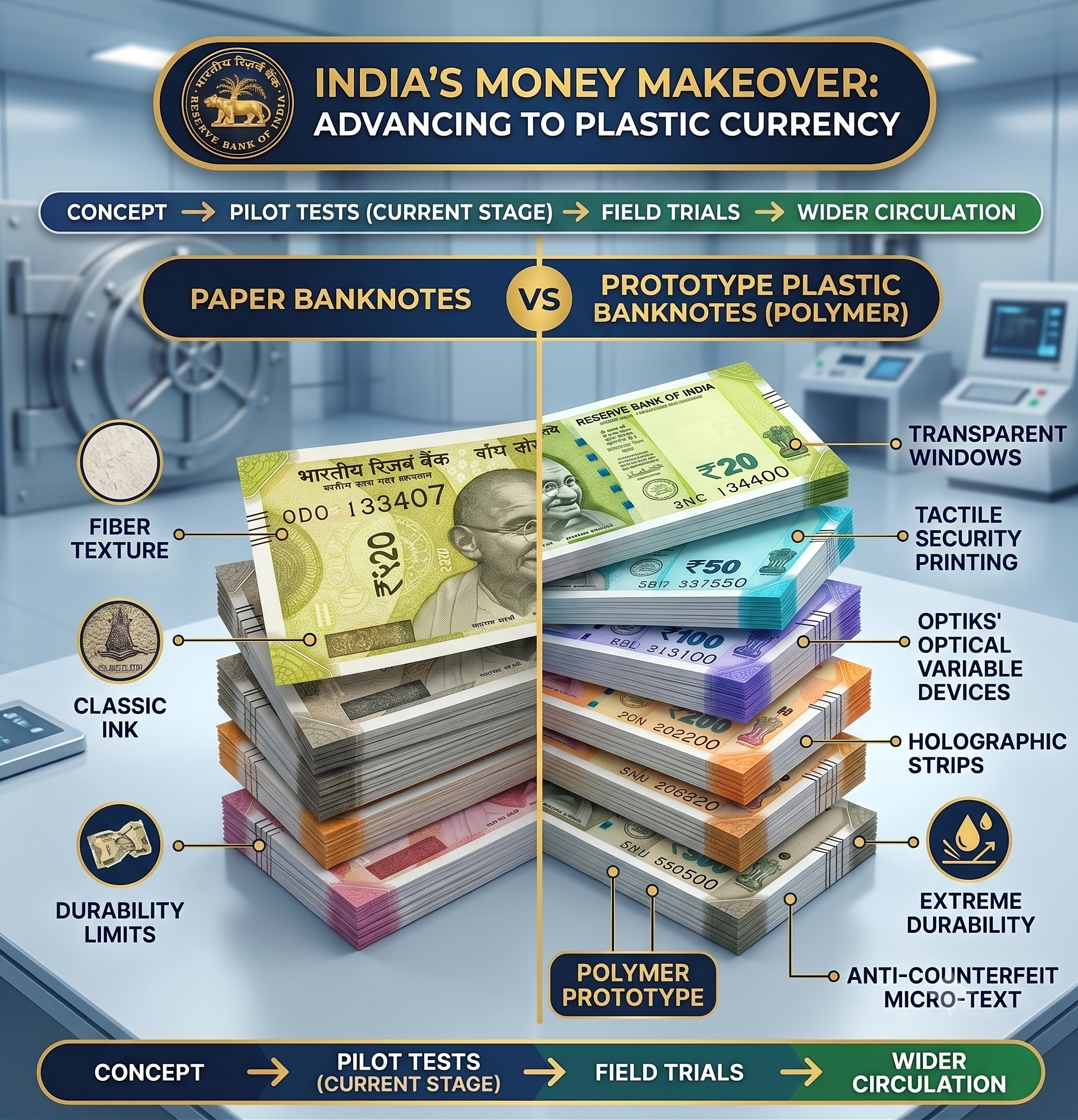
India’s currency system could soon witness one of its biggest transformations in decades as the Reserve Bank of India (RBI) takes significant steps towards introducing polymer-based banknotes, popularly known as plastic notes.
The move aims to replace traditional paper-based currency with a more durable, secure, and technology-driven alternative. The initiative gained momentum after the Bharatiya Reserve Bank Note Mudran Private Limited (BRBNMPL), a subsidiary involved in currency printing, invited global technology partners to help establish a polymer substrate manufacturing facility in India.
The development marks a major step towards building a domestic ecosystem for producing the specialised material required for polymer banknotes.
A New Era for Indian Currency
Most Indian banknotes currently use cotton-based paper embedded with multiple security features. Polymer notes, made from a specialised plastic film, offer greater durability and can withstand daily wear and tear more effectively.
Reports suggest that the initial phase may focus on lower denomination notes, including ₹10 and ₹20, with field trials planned to evaluate their performance under Indian conditions. However, the RBI has not yet announced an official launch date or final rollout plan.
Why Polymer Notes Could Change the Way India Uses Cash
The proposed polymer currency comes with several advantages:
Longer Life: Unlike paper notes, polymer notes are more resistant to tearing and damage, allowing them to remain in circulation for a longer period.
Water and Dirt Resistant: Their plastic-based material prevents damage caused by moisture, stains, and frequent handling.
Advanced Security Features: Polymer notes can include sophisticated anti-counterfeiting technologies such as transparent windows, optical elements, and advanced security markings.
Cost Savings Over Time: Although manufacturing costs may initially be higher, the extended lifespan of polymer notes can reduce the need for frequent replacement.
RBI Focuses on Domestic Production
Through the Expression of Interest (EOI), BRBNMPL is looking for companies with expertise in manufacturing security-grade polymer substrates. The objective is not only to source technology but also to develop India’s own manufacturing capability for currency materials.
The process includes strict security guidelines to ensure that the production of currency-grade materials meets national security requirements.
Learning From Global Examples
Countries such as Australia, Canada, New Zealand, and the United Kingdom have already adopted polymer banknotes due to their durability and enhanced security features.
More than 60 countries worldwide currently use polymer currency, making it an established technology in the global financial system.
No Demonetisation-Like Move
The possible introduction of polymer notes should not be confused with demonetisation. Existing paper currency will continue to remain legal tender, and old notes will circulate alongside the new polymer notes if the RBI proceeds with the rollout.
The transition, if approved, will be gradual and based on the outcome of trials and assessments.
India’s Next Step Towards Smarter Currency
The RBI’s move reflects a broader effort to modernise India’s currency infrastructure by combining durability, security, and technology. If successfully implemented, polymer banknotes could redefine everyday cash usage in India and mark a new chapter in the country’s financial journey.