Beyond the Pandal: How Durga Puja Is Turning Celebration into a Force for Change
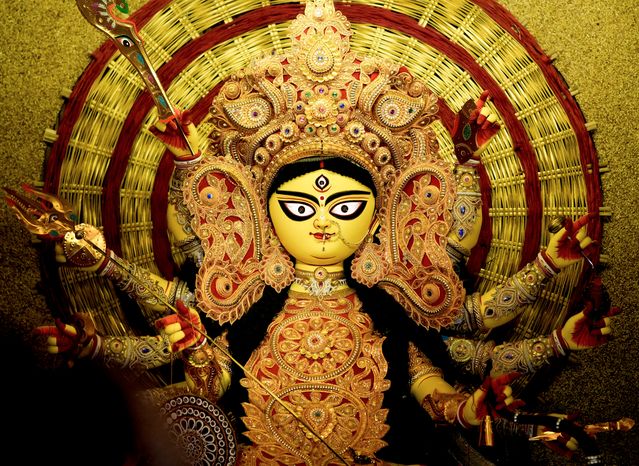
Pic Credit: Pexel
Every autumn, Kolkata undergoes a remarkable transformation. Streets glow with elaborate lights, neighbourhoods come alive with music and millions of people step out to experience the artistry of Durga Puja.
But behind the grandeur of the idols and beautifully designed pandals lies something deeper. Across West Bengal, the festival has increasingly become a platform where communities express their concerns about society, the environment, technology and inclusion.
In this sense, Durga Puja is much more than a religious celebration. It has evolved into a living cultural tradition where devotion, creativity and public awareness come together.
When the city becomes an open-air gallery
For several days, Kolkata effectively becomes a vast exhibition space.
Temporary pandals take shape across neighbourhoods, with each community bringing its own artistic interpretation to the festival. Traditional craftsmanship sits alongside contemporary design, while themes often reflect issues that affect everyday life.
The clay idols created by artisans, the sound of dhaaks, elaborate lighting and thousands of visitors moving from one pandal to another create an atmosphere that is both festive and theatrical.
Yet the real strength of the celebration lies in participation. Residents contribute funds, volunteers help organise events, artists and craftspeople work for weeks or months, and local businesses benefit from the surge in activity.
From food vendors and transport operators to decorators, artisans, designers and small retailers, a wide network of livelihoods is connected to the festival.
A tradition recognised as global heritage
The cultural significance of Durga Puja received international recognition in 2021, when UNESCO inscribed it on its Representative List of the Intangible Cultural Heritage of Humanity.
The recognition reflects the festival’s distinctive combination of religious practice, community participation and artistic expression.
Unlike heritage preserved behind museum walls, Durga Puja remains dynamic. Its traditions are passed from one generation to another, while its artistic themes continue to change with the times.
That ability to reinvent itself has helped the festival remain relevant to younger generations while retaining its traditional character.
When devotion carries a social message
Perhaps the most striking feature of contemporary Durga Puja is the way pandals are being used to start conversations about issues that extend far beyond religion.
Environmental sustainability, biodiversity, water conservation, agriculture, social justice and technological change have all found their way into festival installations.
One pandal used its artistic setting to draw attention to sustainable agriculture, including a display featuring hundreds of rice varieties from eastern and northeastern India. The message was straightforward: protecting traditional biodiversity and promoting sustainable farming are essential for the future.
Elsewhere, artistic installations have focused on the changing relationship between people and nature.
A theme centred on the disappearance of familiar natural sounds — birdsong, rustling leaves and frogs — offered visitors a moment of reflection on environmental degradation and shrinking habitats.
For many visitors, these installations turn abstract concerns into something personal and memorable.
Technology enters the world of tradition
Artificial intelligence has also become part of the conversation.
An AI-inspired pandal combined the familiar image of Goddess Durga with futuristic visuals featuring digital patterns, circuitry and glowing lights. The installation reflected a reality that is becoming increasingly difficult to ignore: technology is rapidly changing the way people work, communicate and live.
The theme also encouraged a more balanced discussion about technological progress.
AI can create new opportunities in education, business, creativity and innovation, but concerns around deepfakes, digital fraud and the misuse of personal images are growing.
By bringing these subjects into a public cultural space, Durga Puja provides an unusual but powerful platform for technology awareness.
From awareness to empathy
Other pandals have focused on deeply personal social issues.
Themes addressing acid attack survivors, water scarcity and social violence have sought not merely to inform visitors but to encourage empathy and collective responsibility.
This is one of the festival’s most compelling qualities: a visitor may arrive expecting an evening of celebration but leave having encountered a subject that prompts reflection.
For young people in particular, such presentations can make complex social and environmental issues easier to understand.
Instead of reading about groundwater depletion or biodiversity in a textbook, they encounter these ideas through art, storytelling and an experience shared with thousands of others.
Building a more inclusive celebration
The transformation is not limited to themes and artistic expression. Efforts are also being made to make Durga Puja more accessible.
In 2025, UNESCO and the United Nations in India, along with organisations representing persons with disabilities, introduced accessibility guidelines aimed at helping festival organisers create more inclusive celebrations.
Practical measures include ramps and barrier-free movement, Braille information, sign-language interpretation and designated quiet spaces.
Such changes may appear simple, but they can make a significant difference to families who have traditionally faced barriers while participating in large public celebrations.
The goal is to ensure that the festival’s community spirit genuinely lives up to its inclusive character.
A cultural economy that reaches far beyond the festival
Durga Puja also represents a major economic ecosystem.
The festival creates seasonal demand for artisans, decorators, electricians, transport providers, caterers, retailers, performers and countless small businesses.
A 2019 study estimated that industries linked to Durga Puja generated around $4.53 billion, equivalent to about 2.58 per cent of West Bengal’s GDP.
The economic impact demonstrates how cultural traditions can support livelihoods while strengthening local creative industries.
For artisans in particular, the festival provides an important annual market for skills that have been developed and passed down over generations.
The changing face of a timeless celebration
Durga Puja’s enduring appeal may lie precisely in its ability to change without losing its identity.
The goddess remains at the heart of the celebration, but the stories surrounding her can speak to contemporary concerns. A traditional pandal can become a conversation about climate change. An idol can appear alongside digital imagery. A neighbourhood celebration can become a platform for disability inclusion.
This combination of tradition and reinvention makes Durga Puja particularly relevant in a rapidly changing society.
It demonstrates that culture does not have to remain frozen in the past. It can respond to the present, question social realities and encourage communities to imagine a better future.
More than a festival
As the lights eventually come down and the pandals disappear, the conversations they created can continue.
That may be Durga Puja’s greatest strength.
It brings people together through faith and celebration, but increasingly uses that shared experience to encourage conversations about sustainability, technology, social responsibility and inclusion.
In Kolkata, the festival is therefore not simply something people attend. It is something communities create together — and, increasingly, something through which they reflect on the kind of society they want to build.
Durga Puja remains rooted in tradition, but its message continues to move with the times.