Assistance dogs interpret needs of the person they assist non-verbally
University of Turku, Finland, Apr 14: A recent study shows that assistance dogs not only help people with practical tasks, but also actively contribute to their care, based on mutual trust and the continuous interpretation of each other.
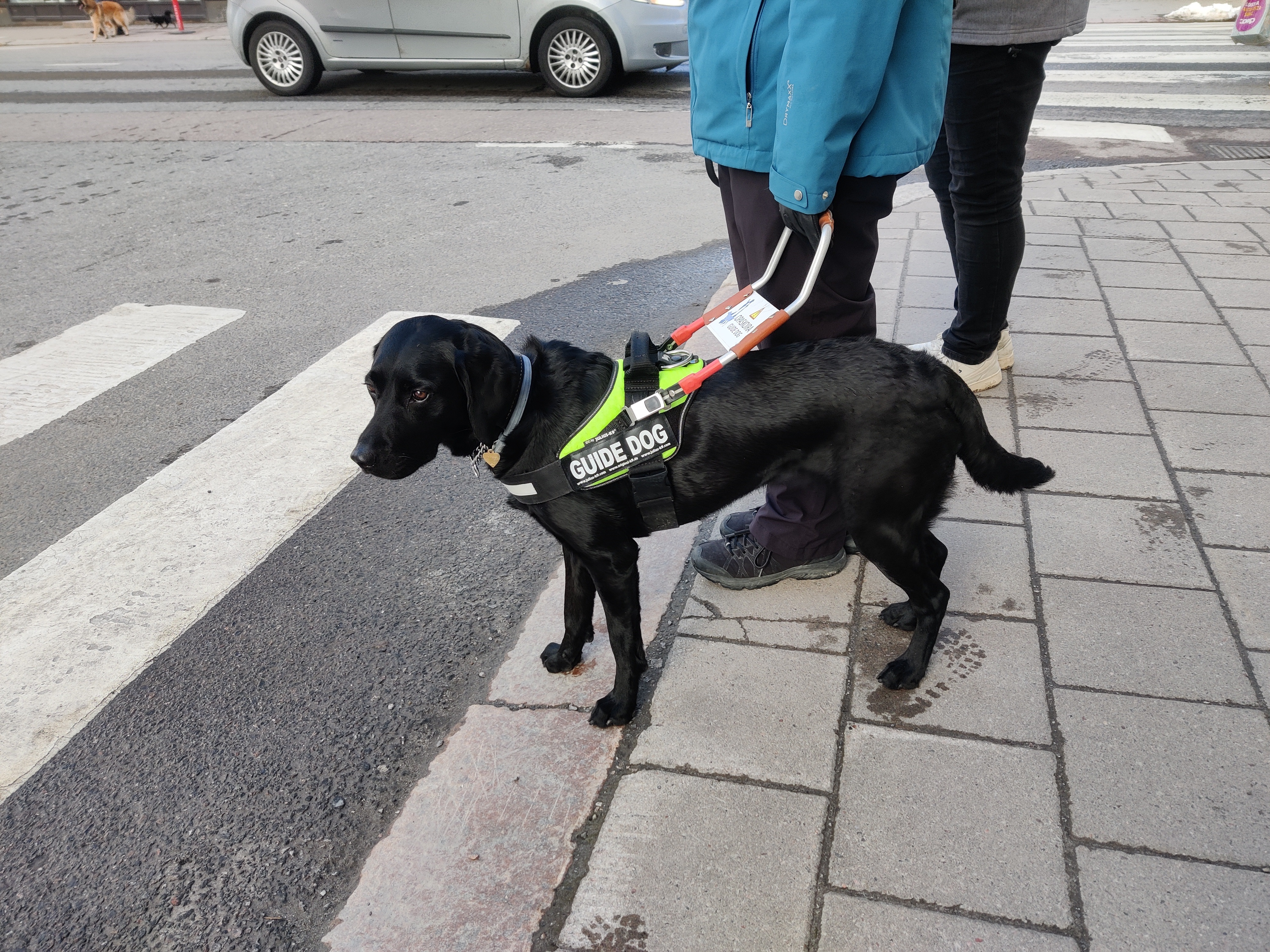
Assistance dogs are active caregivers, according to a new study by the University of Turku and Aalto University in Finland. The study examined the collaborative interaction between humans and assistance dogs. Dogs perform invisible care work by, for example, anticipating their human’s health status, providing mobility assistance, and offering emotional support in ways that neither a human nor a robot could replace.
The key finding of the study is that the care provided by an assistance dog is based on mutual trust and constant reading of the person being cared for, often without the need for speech. Humans and dogs learn to interpret each other’s subtle gestures, movements, and reactions non-verbally.
“Care work is the results of bodily interaction, meaning small gestures and the working dog’s sensitivity to interpreting people and responding to the needs of those who require assistance”, explains Suvi Satama, Assistant Professor of Management and Organisation at the University of Turku.
The study was conducted by Satama and Astrid Huopalainen from Aalto University, who have been collaborating for 15 years. According to them, the bodily nature of interspecies care work brings to light the subtle dimensions of care and subtle power dynamics that are often overlooked in interpersonal care.
The study analysed the everyday lives of 13 assistance dogs and their human companions through interviews, ethnographic observations, and photographs.
People rely on their assistance dogs
The study shows that assistance dogs act as kind of care professionals, whose instructions humans must follow. In some situations, people have to rely on their dog’s judgement more than their own.
“For example, a person with diabetes must rely on the dog when the dog detects changes in blood sugar. When the person responds to the dog’s signal and checks their blood sugar or follows the dog’s alert to take the necessary medication in time, serious situations can be avoided”, says Satama.
According to the researchers, this dynamic turns the traditional care relationship between humans and dogs on its head: the care is not one-sided or something in which humans take care of dogs.
“Assistance dogs care for humans, and humans also do their best to care for their assistance dogs. In this way, vulnerability becomes relational, and both parties give and receive care”, says Satama.
Researchers hope to spark conversation on the role of animals in society
The researchers challenge the human-centred view where animals are seen as passive agents. In the research material, the assistance dogs are portrayed as active, intelligent, and sentient individuals with their own, entirely unique roles at the workplace and in society.
According to Satama, it was interesting to observe during the study how the working dogs know when they are off duty and sometimes use their agency to play tricks on their humans or otherwise do things their own way from time to time.
“For example, I was observing a meeting of people with visual impairments, at which their assistance dogs were also present. The dogs had been told to stay on the floor next to their people. Suddenly, one of the assistance dogs started crawling towards another dog and some scents, and the person did not notice this due to their visual impairment. I thought that the dog was carrying out their own agency”, Satama says.
The researchers hope that the study would spark a discussion about the diverse roles of animals and their well-being at work in different organisations.
“When we recognise animals as agential caregivers, we can also better understand the care work between humans and its various dimensions”, Satama emphasises.
The study is part of the PAWWS – People and Animal Wellbeing at Work and in Society research project (2023–2027), funded by the Research Council of Finland. Astrid Huopalainen serves as the consortium Principal Investigator of the project. The project examines collaboration and mutual well-being between humans and animals in the workplace. The aim of the project is to understand how animals contribute at work, what type of roles they take in society, and what ethical issues this involves.
