Finding the best dietary supplements for cycling performance – and recovery
Posted On April 21, 2026
Focusing on the rigours of elite cycling, Flinders University experts have put performance-enhancing and other dietary supplements under the microscope, rating some more highly than others.
From carbs, beetroot juice and the latest sports gels, the research new highlights how a range of dietary supplements may help improve cycling performance, working to support the body’s energy systems and reducing fatigue during exercise.
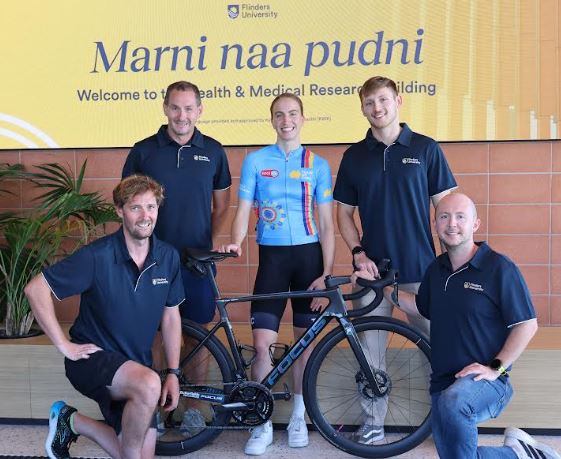
The research team – including Australian Olympic cyclist Sophie Edwards, who is studying Medicine at Flinders University (pictured) – found the strongest evidence for beta-alanine, caffeine, carbohydrates (such as sports gels), creatine monohydrate, dietary nitrates (such as beetroot juice), electrolytes and sodium bicarbonate as ergogenic supplements to support cycling performance.
“They influence how muscles produce and use energy, which is crucial for high-performance athletes,” says Flinders Professor in Clinical Pharmacology Andrew Rowland, from the College of Medicine and Public Health, who led the study published in the Journal of the International Society of Sports Nutrition.
During exercise, the body continuously regenerates energy through several pathways that support different types of effort – from short, explosive bursts to longer endurance activity.
“We found the strongest evidence for these performance supplements supporting the body’s energy systems by improving fuel use, increasing buffering capacity, enhancing energy availability and delaying fatigue,” says Professor Rowland.
In addition to supplements that directly enhance performance, the research also found support for other medical and recovery focussed supplements which can play an important indirect role by supporting bone health, connective integrity, inflammation management, micronutrient status, muscle repair and gut function.
The research found evidence to support the use of calcium, cheery juice, collagen, curcumin, iron, multivitamins, omega-3 fatty acids, pickle juice, probiotics, protein, vitamin C, vitamin D and zinc for other medical and recovery issues.
“The relationship between nutrition, training and performance optimisation in elite cyclists depends on individualised supplementation strategies tailored to training demands and competitive goals, to either improve recovery, support immunity or promote long-term physiological adaptation,” says Professor Rowland.
“In practice, effective supplementation should be viewed as an adjunct and not a replacement for training, nutrition and recovery.
“Evidence-based, individualised, and ethically sound strategies are essential to maximise both performance outcomes and athlete wellbeing,” he says.
To broadly guide the safe and effective use of ergogenic and medical supplements in sport, classification systems such as the four-tier Australian Institute of Sport (AIS) framework provide evidence-based recommendations for athletes and practitioners. These range from Group A supplements with strong scientific support, through those with limited or emerging benefits, to Group D supplements which are banned.
“Within the broad guidance provided by the Australian Institute of Sport framework, there is a need to personalise supplement strategies based on individual factors such as sex, age, hormonal status, genetic predispositions and gut microbiota composition, which may influence both efficacy and safety.
“Optimising supplementation requires aligning individual metabolic demands with targeted compounds that support key pathways involved in energy production, buffering, recovery and resilience.”
Supplements with strong evidence in cycling include: Beta-alanine, caffeine, carbohydrates, creatine monohydrate, dietary nitrates, electrolytes, glycerol and sodium bicarbonate. These supplements are supported by high-quality evidence and can provide meaningful performance benefits when used appropriately.
Individualisation of supplement programs is essential: Supplement strategies should be tailored to the athlete’s characteristics and context, including sex, age, training status, and environmental conditions such as heat and altitude. Physiological testing of such aspects as VO₂max, lactate threshold, sweat sodium concentration, micronutrient status can help guide the selection and timing of these supplements.
Health, safety and anti-doping considerations must apply: The researchers emphasise that only supplements tested by cycling populations and screened by independent third-party programs should be used, to minimise health risks and inadvertent doping violations. They warn that athletes who take supplements must remain vigilant under the WADA strict liability principle, which places full responsibility for all substances in their system on the competitor.
The research – ‘A comprehensive review of the physiology and evidence base to guide the use of ergogenic and medical supplements for enhanced cycling performance’ (2026) by Andrew Rowland, Sophie Edwards, Gorka Prieto-Bellver, Bradley Menz, Angela Rowland, Erik Cornelisse, Christos Karapetis, Matthew Wallen and Ashley Hopkins – has been published in the Journal of the International Society of Sports Nutrition. DOI: 10.1080/15502783.2026.2630487
Caption: Professor of Clinical Pharmacology Andrew Rowland, back left, with coauthors Associate Professor Ashley Hopkins, front left, and sport nutritionist Dr Robyn Jones and Bradley Menz, discuss the research with pro cyclist and Flinders med student Sophie Edwards
